
App growth and user acquisition
An App Growth Agency for User Acquisition That Pays Back
Installs are the easy part of app growth. Almost any budget can buy them, and almost any dashboard can make them look good. Yori Labs is an app growth agency for fintech, gaming, ecommerce and subscription apps, and we're judged on what happens next: the first deposit, the first order, the first paid month, and how soon the money spent winning that user comes back.

On this page
This page covers what an agency like ours should answer for, the channels we run, how a campaign goes from first test to scale, what it costs and the campaigns behind it. If you already know what you need, skip to the end and tell us what a paying user is worth to you.
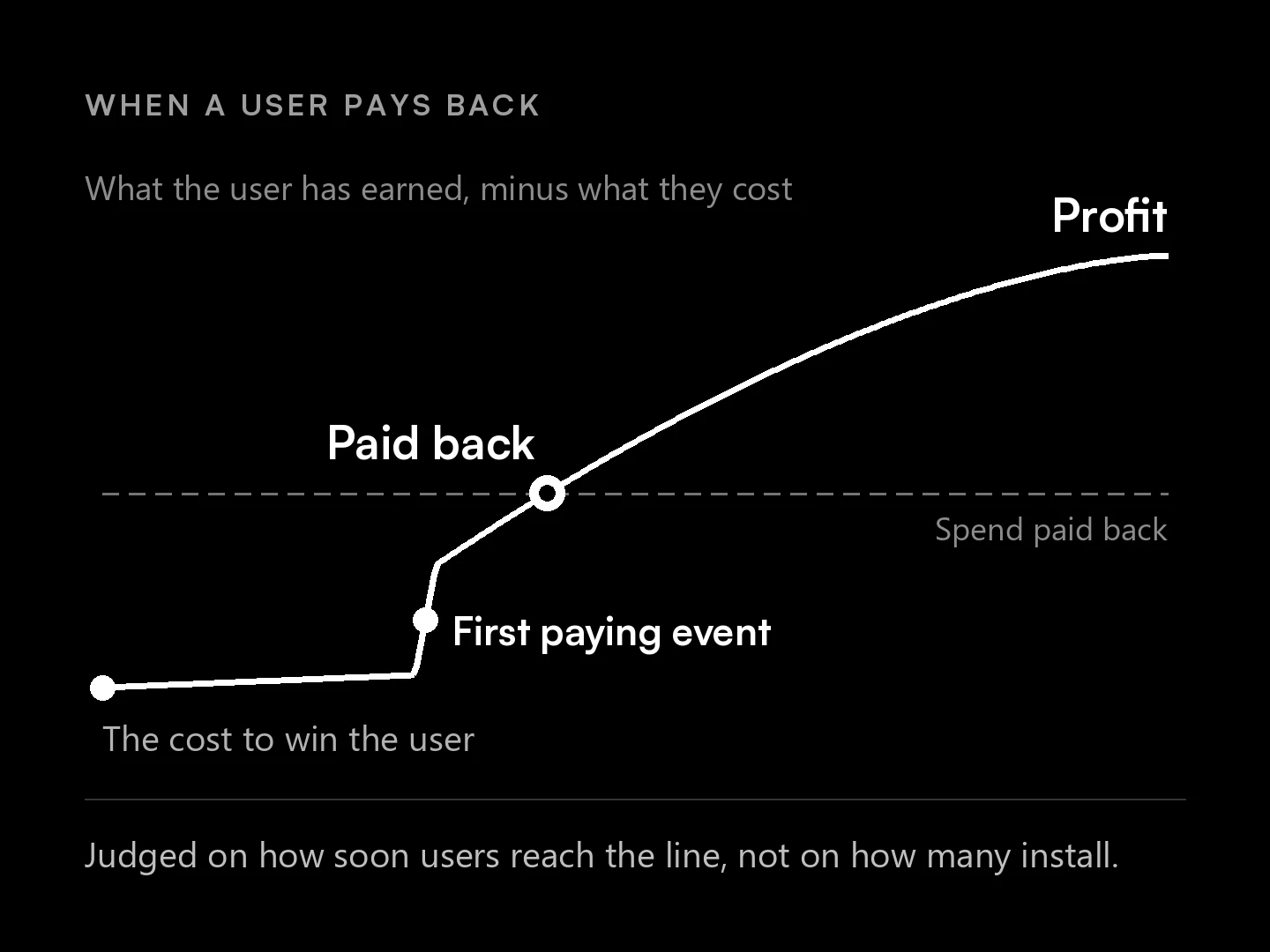
What an app growth agency should be accountable for
Most agencies are hired on reach and kept on reports. The reports fill up with installs, clicks and cost per install, and none of those pay for the app. An agency should answer for the numbers your finance team watches: what a customer costs to win, and how long it takes them to pay that back.
Growth that pays back, not growth that reports well
Cheap installs are easy to find. They come from placements where people tap by accident, from rewards that attract people who'll never return, and sometimes from no people at all. A campaign built on them looks efficient for a month, then stalls, because the users behind it never pay.
Growth that pays back is slower to start and much easier to scale. Every source is judged on the paying event and on how long it takes to earn its spend back, so budget keeps moving toward the people who become customers.
The first paying event, app by app
Every app has one moment when a user starts earning money for the business. For a banking app it's a funded account. For a real money game it's a first deposit. For a shopping app it's the first order, for insurance the first policy, and for a subscription the first payment that survives the refund window.
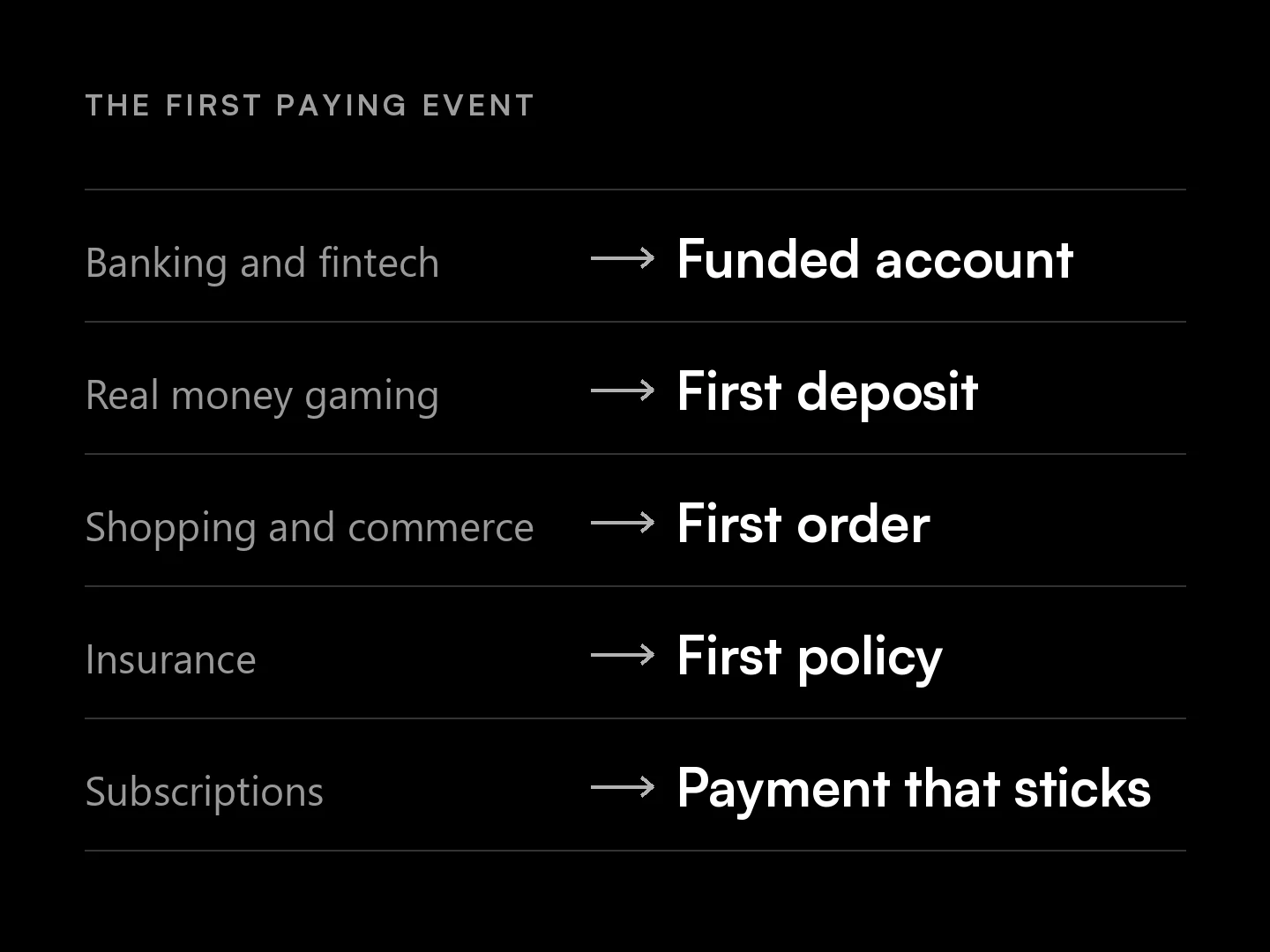
We agree that event with you before anything is bought, because it decides what every campaign is allowed to optimise toward.
Our user acquisition services
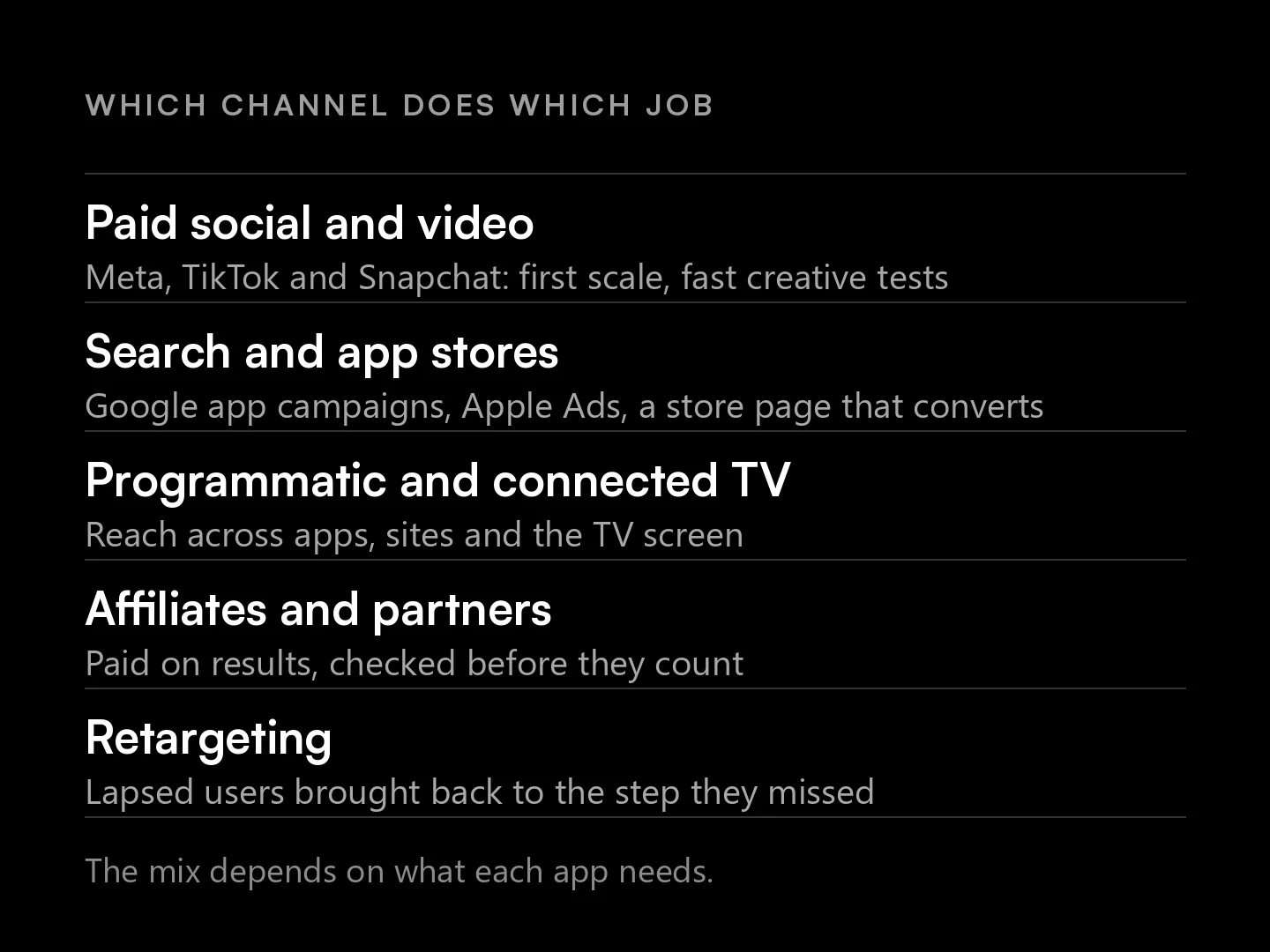
We run the channels where app users actually spend their time, but not every channel for every app. The mix depends on what the app needs and what you ask for, and each channel has to earn its place against the same paying event.
Paid social and video
Meta, TikTok and Snapchat are where most apps find their first real scale. These platforms now reward creative more than targeting, so the work is feeding them ideas worth learning from and reading every result against the paying event, not the install.
Search and app stores
Google's app campaigns run across Search, Google Play, YouTube and more. Apple Ads, which most people still call Apple Search Ads, puts your app in front of people searching the App Store. Both reach people already looking for an app like yours.
We pair them with app store optimisation, because a store page that doesn't convert wastes every channel that sends people to it. Apple lets you test alternative versions of your product page, and we'd rather learn what converts there before scaling spend.
Programmatic and connected TV
Programmatic reaches people across thousands of apps and sites, and connected TV puts the brand on the biggest screen in the house. Both work best once the core channels are paying back. Our work as a programmatic advertising agency covers how we buy it and which platforms suit which apps.
Affiliate and partner traffic
Affiliates are paid when the result happens, which makes them attractive and easy to get wrong. We work with partners who can show where their traffic comes from, and we check it before it's allowed to count.
Creative built to be tested
Creative is the biggest lever left in paid acquisition, and it wears out fast. We plan it in rounds: new ideas, variations on what's working, and ads made with creators and influencers when the app suits a real person talking to camera. The next round is already in testing before the current one tires.
Retargeting lapsed users
People who installed and went quiet are cheaper to win back than new users are to find. Retargeting brings them back to the step they didn't finish, whether that's verification, a first deposit or a basket they left behind. The discipline is frequency: chase too hard and you're paying to annoy your own customers.
How we grow an app, from first test to scale
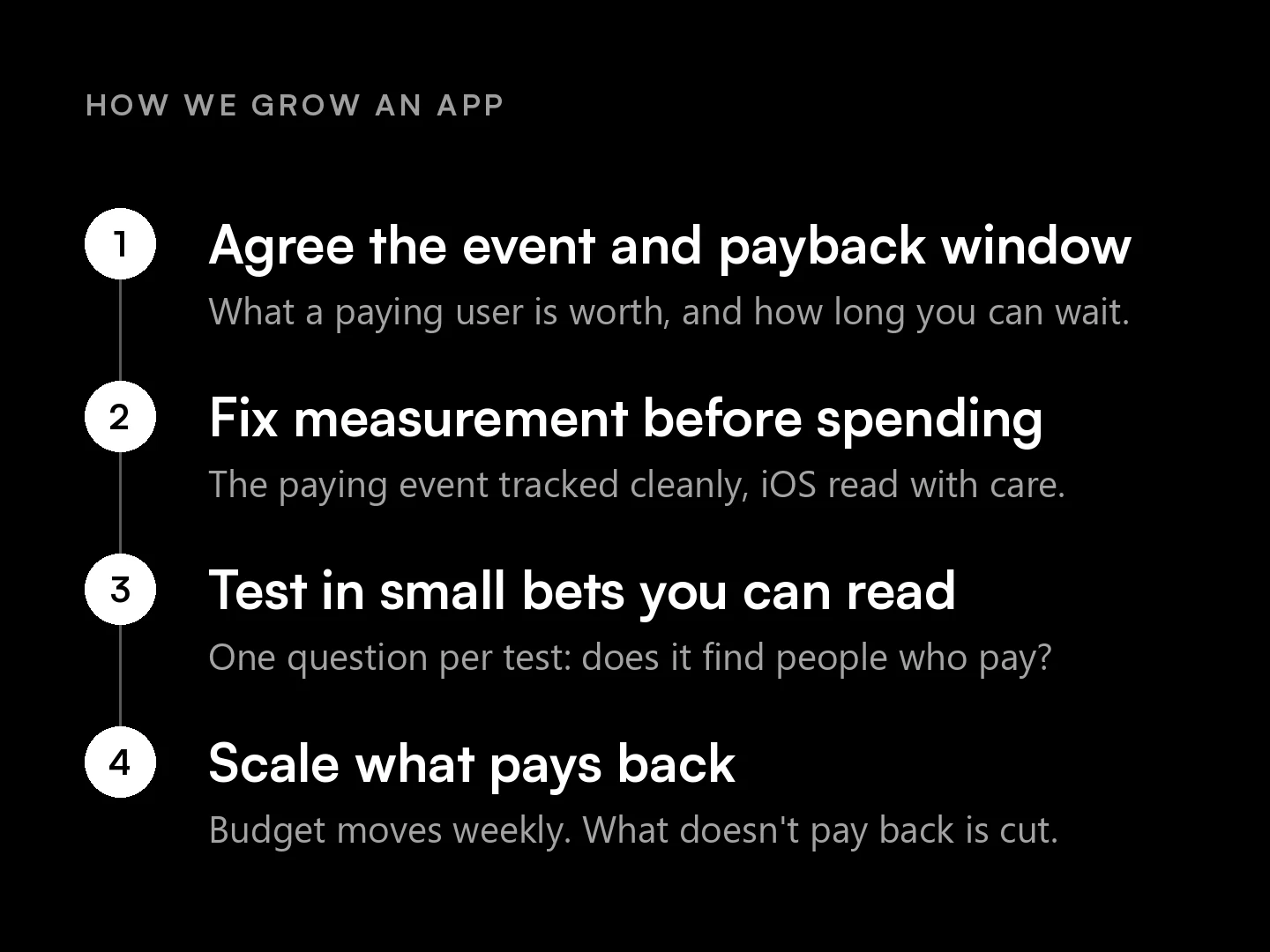
Step 1: Agree the event and the payback window
We start with two answers from your side: what a paying user is worth to you, and how long you can wait to earn back what they cost. Everything after that is judged against them, so a channel that looks cheap but never pays back is found out early.
Step 2: Fix measurement before spending
If the paying event isn't tracked properly, every channel optimises toward noise. We check your attribution setup, whether that's AppsFlyer, Adjust or another, and make sure the event fires reliably.
On iOS, Apple limits what can be measured about each person. Results there come through AdAttributionKit, which measures campaigns while protecting user privacy, so we read them with care rather than at face value.
Step 3: Test channels and creative in small bets you can read
Early budget is split into tests big enough to give a clear answer and small enough that a wrong answer is cheap. Each test asks one question: does this channel, audience or idea find people who pay?
Step 4: Scale what pays back, cut what doesn't
Budget moves every week toward the sources, audiences and creative that bring paying users at a cost that comes back in time. What doesn't pay back is cut, not kept alive to flatter a report. Scaling happens in steps, because the cheapest users are always found first and each new layer of spend costs a little more.
Keeping acquisition clean
Fraud in app marketing is common, and rarely dramatic. It's installs from devices no person is holding, clicks fired to steal credit for users who would have come anyway, and sign ups that never open the app again.
Why a fake install costs you twice
You pay for it once when you buy it. You pay again when the bidding algorithm learns from it and goes looking for more of the same. That's why we validate traffic before it's allowed to shape bidding, not after the monthly report.
What a source has to pass before it gets more budget
A source earns more budget when its users behave like people: installs spread naturally through the day, a gap between click and install that a human could manage, activity after the install, and paying events in line with the rest of your traffic. Sources that fail are excluded the same day.
App growth for fintech, gaming, ecommerce and subscription apps
The method is the same everywhere. What counts as a good user is not.
Fintech and banking
The paying event is a verified, funded or active account. Identity checks sit between the install and the money, so a user who stalls at verification is an expensive one. For Tide, the work was turning installs into opened business accounts, improving the campaign month on month.
Gaming and iGaming
Games are judged on engaged players and, in real money gaming, on first deposits. Every platform sets its own rules for gambling advertisers by country and licence, so eligibility is confirmed before a single ad runs.
Ecommerce and social commerce
Here it's the first order, and then the second. Social commerce adds a twist. For Meesho, the users who mattered most were women reselling to their own networks, so the campaigns were built to find resellers, not just shoppers.
Insurance, utilities and subscriptions
The sale that counts is the one that sticks: a policy bought, a renewal paid, a subscription that survives the refund window. For ACKO, campaigns optimised toward booked policies rather than installs alone.
User acquisition campaigns we've run
A few of the campaigns behind this page, each judged on the event that paid.
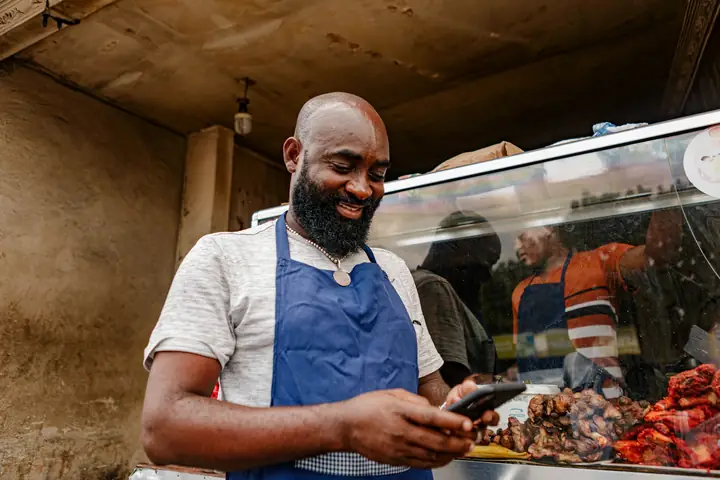
Tide wanted installs that became business accounts. Month on month optimisation grew installs by 37.5% and opened more than 10,000 accounts.
Vance needed cheaper customers and more of them, which is usually a trade off. On Google Ads, it got both: 3x lower acquisition cost and 5x growth.
ACKO needed installs fast, and policies from them: 5 lakh installs and more than 550 policies booked in 45 days.
Meesho reached women resellers through Google's app campaigns fed with real time data, and beat its monthly transaction goals for women resellers by 50%.
 37.5%
37.5%Tide case study
Transforming Tide's Month on Month Growth with a 37.5% Surge in Installs and 10K+ Accounts Opened
37.5% · Increase in installs
Read the case study 3x
3xVance case study
3x Lower CAC and 5x Growth for Vance with Google Ads
3x · Lower customer acquisition cost
Read the case study 5 lakh
ACKO case study
Reaching 5 Lakh App Installs and Booking 550+ Policies for ACKO in 45 Days
5 lakh · App installs
Read the case study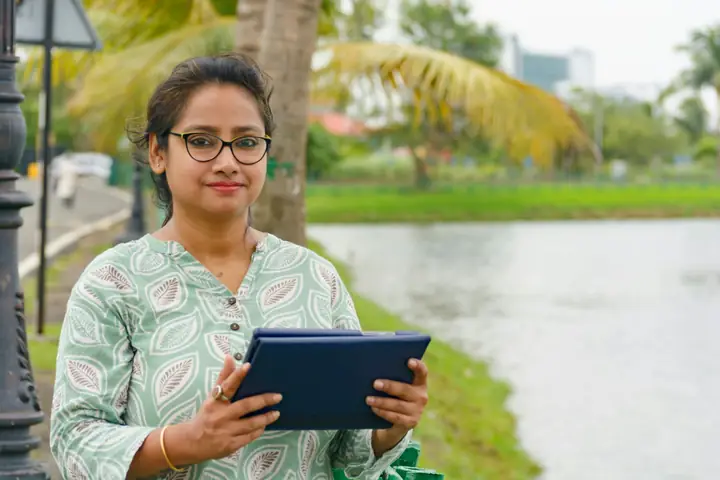 80%
80%Meesho case study
Using Machine Learning and Real Time Data to Acquire Female Resellers via UACs
80% · Female resellers
Read the case studyWhat it costs, and when it pays back
Here's how the first three months usually go, and where the money goes.
The first weeks are for learning. Every platform needs enough paying events to learn from, so the budget has to be big enough to produce them. That's why campaigns start at a media budget of $10,000 a month. Below that, the algorithms never see enough of your paying event to stop guessing.
The second month is where the work starts paying for itself. The first reads are in, weak sources are cut, and the creative that works gets its variations. By the end of the third month you know which channels bring users who pay back, and how fast. That's why our first term is 90 days, and month to month after that.
Our fee is a percentage of media spend, shown on its own line of every invoice:
- 15% of monthly media spend up to $50,000
- 12% from $50,000 to $150,000
- 10% above $150,000
Media is billed at cost. These are the same terms as our programmatic advertising, so there's one price whichever channels your app needs.
App growth in India, the UAE, Indonesia and the US
We run campaigns from New Delhi, where Yori Labs is headquartered, and from our offices in New York, Jakarta and Dubai. App markets differ more than people expect: which store dominates, how people pay, which ads are allowed and what a fair cost per user looks like.
If you're looking for an app growth agency in New York, India or Dubai, that local knowledge is part of the service. India rewards scale and creative in more than one language. The UAE runs Arabic and English side by side. Indonesia is mobile first and moves fast. In the US, Apple's privacy rules shape most plans, because so many users are on iPhone.
Why teams choose Yori Labs as their app growth agency
Because we're judged the way you are. We agree the paying event before we spend, validate traffic before it trains the algorithms, pick channels by what your app needs rather than by habit, and report payback your finance team can check. We've done it for fintech, gaming, commerce and subscription apps from four offices, and the case studies show the numbers.
Frequently asked questions
What does an app growth agency do?
An app growth agency plans, buys and optimises the campaigns that bring an app new users, across paid social, search, app stores, programmatic and affiliates. A good one is judged on paying users rather than installs: it agrees the event that earns money, fixes measurement, tests creative and moves budget to what pays back.
What is user acquisition in app marketing?
User acquisition is the work of winning new users for an app, usually through paid campaigns on social platforms, search, app stores, ad networks and affiliates. The useful measure isn't how many people install, but how many go on to do something valuable, like funding an account or placing an order, and at what cost.
How much does mobile user acquisition cost?
Two costs matter: the media and the agency fee. At Yori Labs, campaigns start at a media budget of $10,000 a month, and the fee is a percentage of spend, from 15% down to 10% as budgets grow. What each user costs depends on the event you pay for, which is why we agree it first.
User acquisition or retention: where should an app spend first?
Fix the leak before filling the bucket. If most new users disappear before the paying event, more acquisition just buys more churn. Start by making sure the first session leads somewhere, then scale acquisition toward the users who stay. Retargeting lapsed users often pays back fastest, because they already know the app.
Should you hire an app growth agency or build your own team?
An agency gets you experienced people, tested playbooks and buying relationships from the first week, which suits most apps before they've found what works. An internal team makes sense once spend is large and steady. Many apps do both: an internal lead who owns the numbers, with an agency running the channels.
How long does it take for user acquisition to pay back?
It depends on your app's model. A shopping app can earn back its cost within the first few orders, while a subscription or lending app may need months. Expect a learning phase of a few weeks, then steady improvement. By the end of the first 90 days you should know which channels pay back, and how fast.
Tell us what a paying user is worth to you
A funded account, a first deposit, an order, a policy, a renewal: tell us which one your business runs on and what it's worth, and we'll show you how we'd grow it.
Start a conversation with Yori Labs