
Programmatic advertising
A Programmatic Advertising Agency That Buys Outcomes, Not Impressions
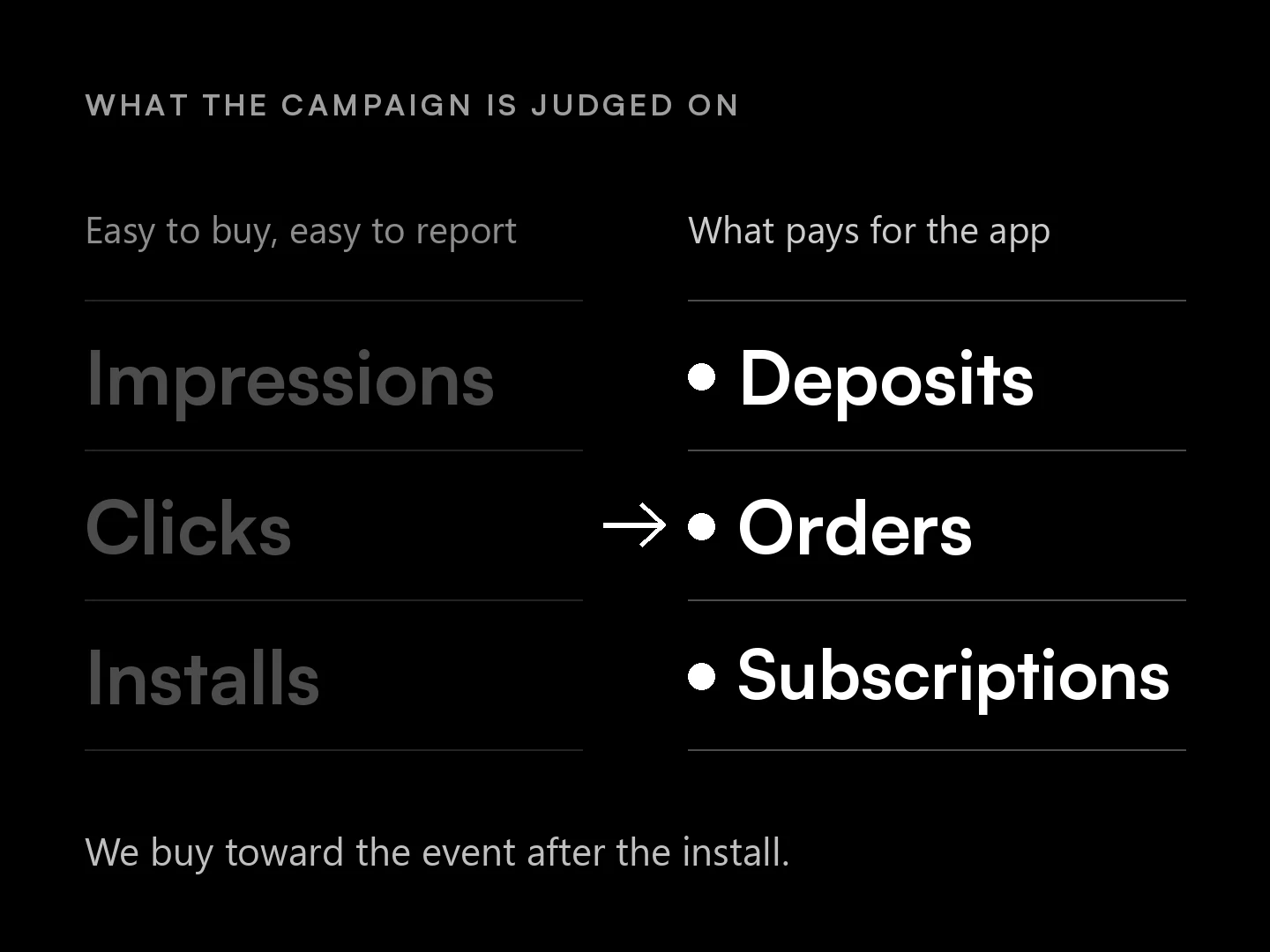
Most programmatic spend is judged on the wrong number. Impressions are cheap to buy and easy to report, and they say almost nothing about whether an app grew. Yori Labs is a programmatic advertising agency for fintech, gaming, ecommerce and subscription apps, and we're judged on the event after the install: the deposit, the order, the paid subscription.

On this page
This page covers how we buy programmatic media, which platforms suit which apps, how we keep fraud out, what it costs and the campaigns behind it. If you already know what you need, skip to the end and tell us the event that pays for your app.
What a programmatic advertising agency should actually do for an app
A demand side platform is software. It bids on ad space in real time, one impression at a time, faster than any person could. The agency is the part that decides what the software is allowed to want.
That decision is most of the job. Tell a bidding algorithm to find installs and it will find installs, including the cheapest ones on the internet, from people who will never open the app twice. Tell it to find funded accounts and it has to work much harder, but everything it learns is worth something.
Buying reach versus buying users
Reach is a brand question: how many people saw this? Users are a business question: how many people did something we'd happily pay for again? Both are fair questions. They need different supply, different creative and different reporting, and mixing them up is how a quarter's budget ends up proving the wrong thing.
Why the install is the wrong finish line
For most of the apps we work with, an install costs money and earns nothing. A lending app earns when a loan is taken. A trading app earns when someone trades. A game earns when a player pays or deposits.
So that's where our campaigns are pointed, and that's the number we report against, even when it makes our own dashboards look less impressive in the first few weeks.
Our programmatic advertising services
We plan, buy and run programmatic media across the formats where app users actually spend their time. Every format is bought against the same business event, so each one has to earn its place in the plan.
Display and native, inside apps and on mobile web
This is the workhorse: banners and native units inside other apps and on mobile sites, bought across open exchanges and private deals. It's quick to test and easy to scale. It's also where traffic quality problems show up first, which is why our validation starts here.
Video that earns attention
Short video, including rewarded formats where people choose to watch in exchange for something inside the app they're using. Rewarded video can be excellent for a game and a poor fit for a lending app, because the viewer is in the middle of play and looking for a reward, not a loan. We choose formats by vertical, not by what happens to be available.
Connected TV
Streaming ads on smart TVs and streaming devices. For apps, connected TV rarely closes the sale on its own. It opens the story: the household sees the brand on the big screen, and the phone in someone's hand converts later. We measure it that way, through incrementality rather than last click, so it isn't punished for doing its real job.
Retargeting lapsed users
People who installed and went quiet are the cheapest users you'll ever win back. Retargeting brings them back to the step they didn't finish: the deposit, the first order, the renewal. The discipline is frequency. Chase people too hard and you're paying to annoy your own customers.
Creative built for the auction
Programmatic creative wears out faster than most teams expect. A concept that wins at launch can be tired within a few weeks, and the bidder will quietly spend more to keep reaching the same fatigued audience. We plan creative in rounds, retire what's fading and have the next idea in testing before the current one runs out.
How our programmatic media buying works
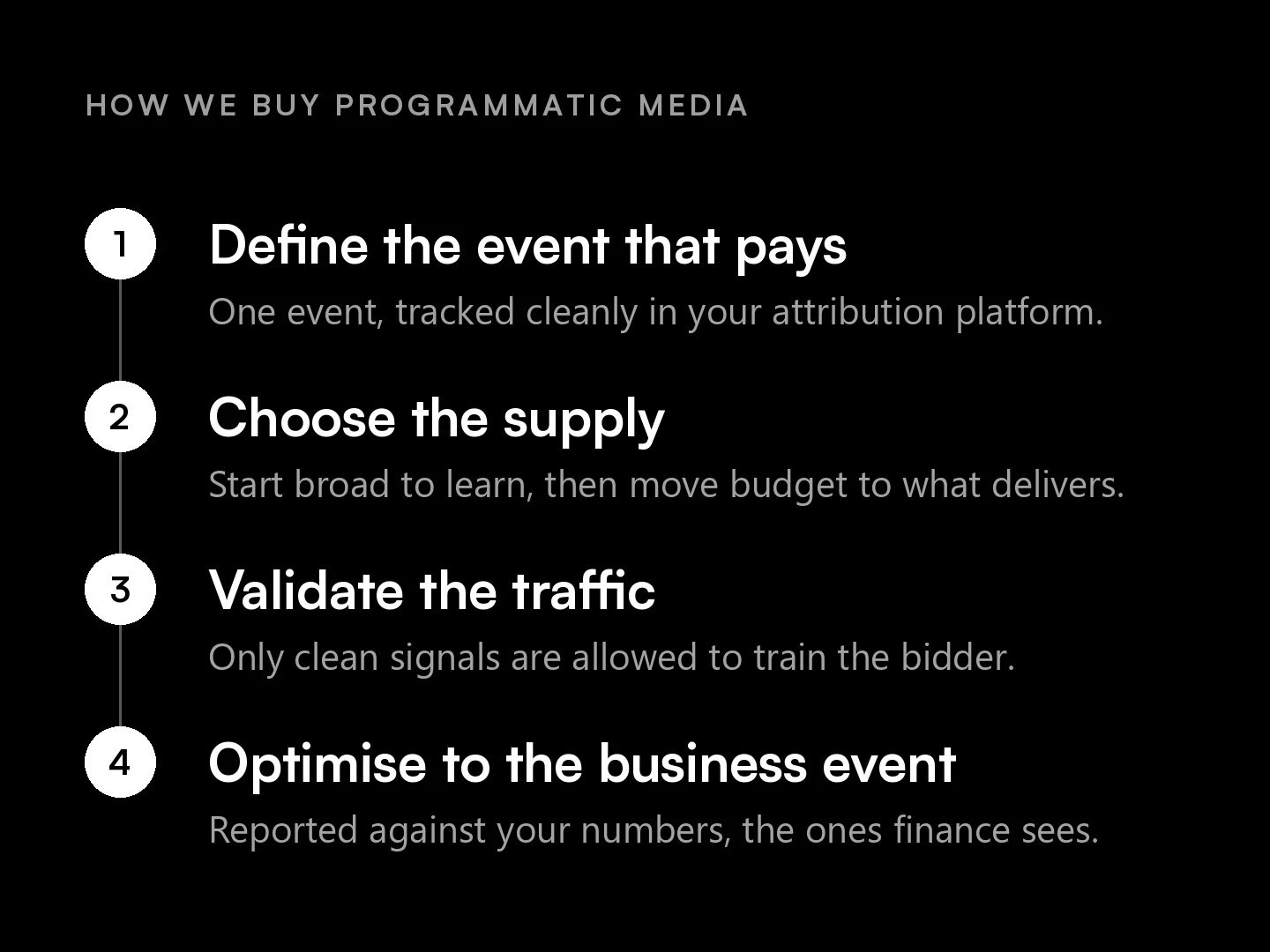
Step 1: Define the event that pays
Before a single impression is bought, we agree on the one event the campaign is judged on, and we check it's tracked properly in your attribution platform, whether that's AppsFlyer, Adjust or another. If the event doesn't fire reliably, the smartest bidding in the world is optimising toward noise.
Step 2: Choose the supply
Programmatic supply comes in layers. The open exchange is the widest and cheapest, and the least controlled. Private marketplaces are invitation only deals with selected publishers. Programmatic guaranteed reserves inventory at a fixed price. We usually start broad to learn, then move budget toward the deals and apps that deliver the event.
Step 3: Validate traffic before it shapes bidding
The bidder learns from whatever you feed it. If fake installs and bot clicks get counted as conversions, the algorithm learns to find more of them. So we validate traffic first and only let clean signals train the model.
Step 4: Optimise to the business event, and report what finance sees
We report on the business event, reconciled against your own numbers rather than a platform's. When finance and marketing read the same figure, budget decisions get faster and far less political.
Which programmatic platform is right for your app?
There's no single best demand side platform. There's a best fit for what you're buying, and most of our clients end up on two or three that work together.
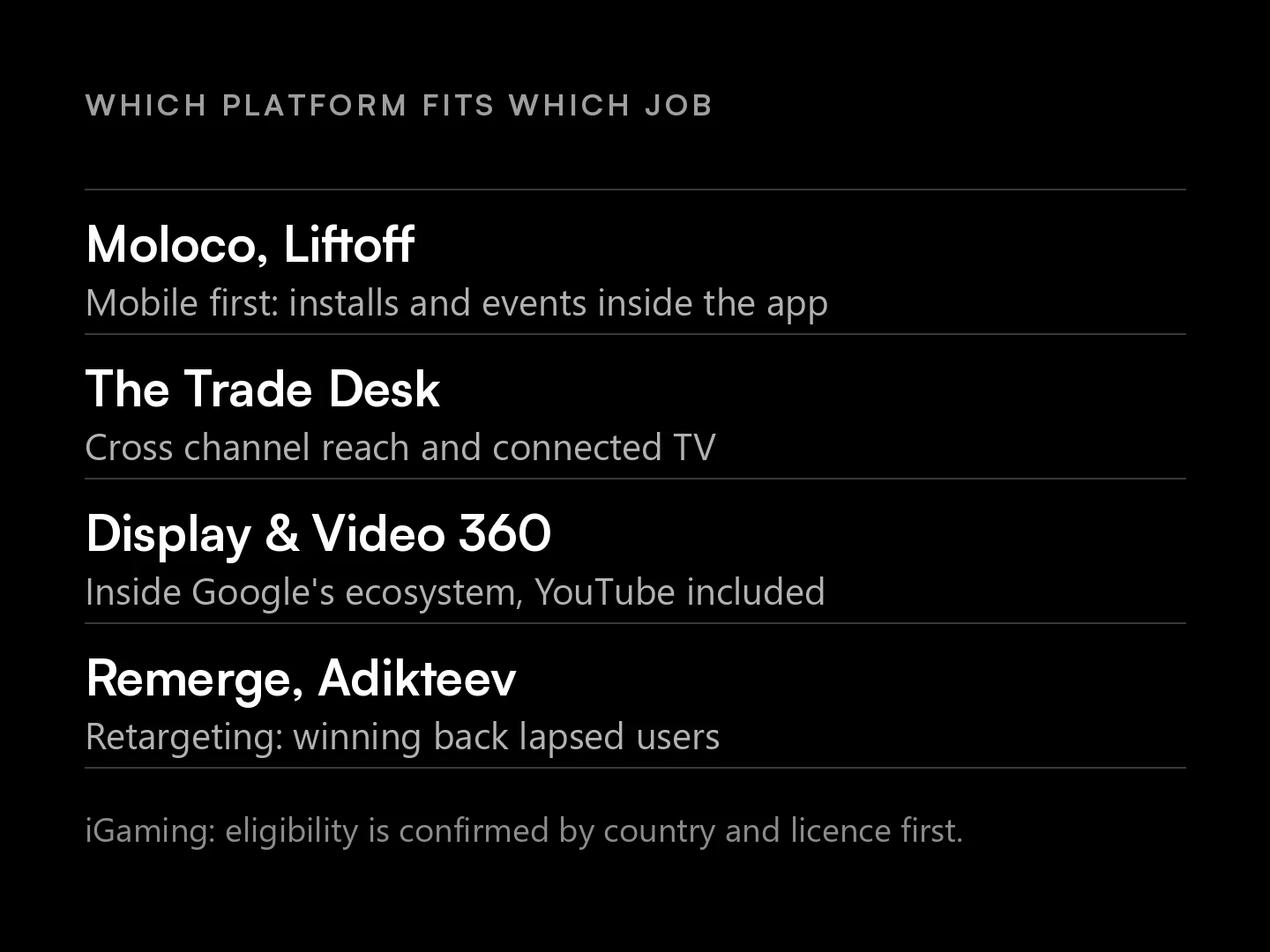
Mobile first platforms for installs and events inside the app
Platforms such as Moloco and Liftoff are built around app outcomes. Their models learn from what users do after the install, which makes them the natural core for apps optimising toward registrations, deposits or purchases.
Cross channel reach and connected TV
The Trade Desk is the largest independent platform and the usual anchor for connected TV, alongside display and video across devices. It suits brands that want the TV screen and the phone working as one plan.
Inside Google's ecosystem
Display & Video 360 fits teams already running on Google's marketing stack, with YouTube and Google's exchange inventory under one roof.
Winning back lapsed users
Retargeting specialists such as Remerge and Adikteev focus on people who already have your app. They're a sensible addition once the acquisition engine is running, not before.
For iGaming, the list is shorter. Each platform sets its own rules for gambling advertisers by country and licence, so we confirm eligibility before we plan a single line of media.
Keeping fraud out of your programmatic spend
Fraud in programmatic is rarely dramatic. It's a steady leak: impressions no one saw, clicks fired by scripts, installs that never open the app, and sellers reselling inventory they don't own.
Supply path checks
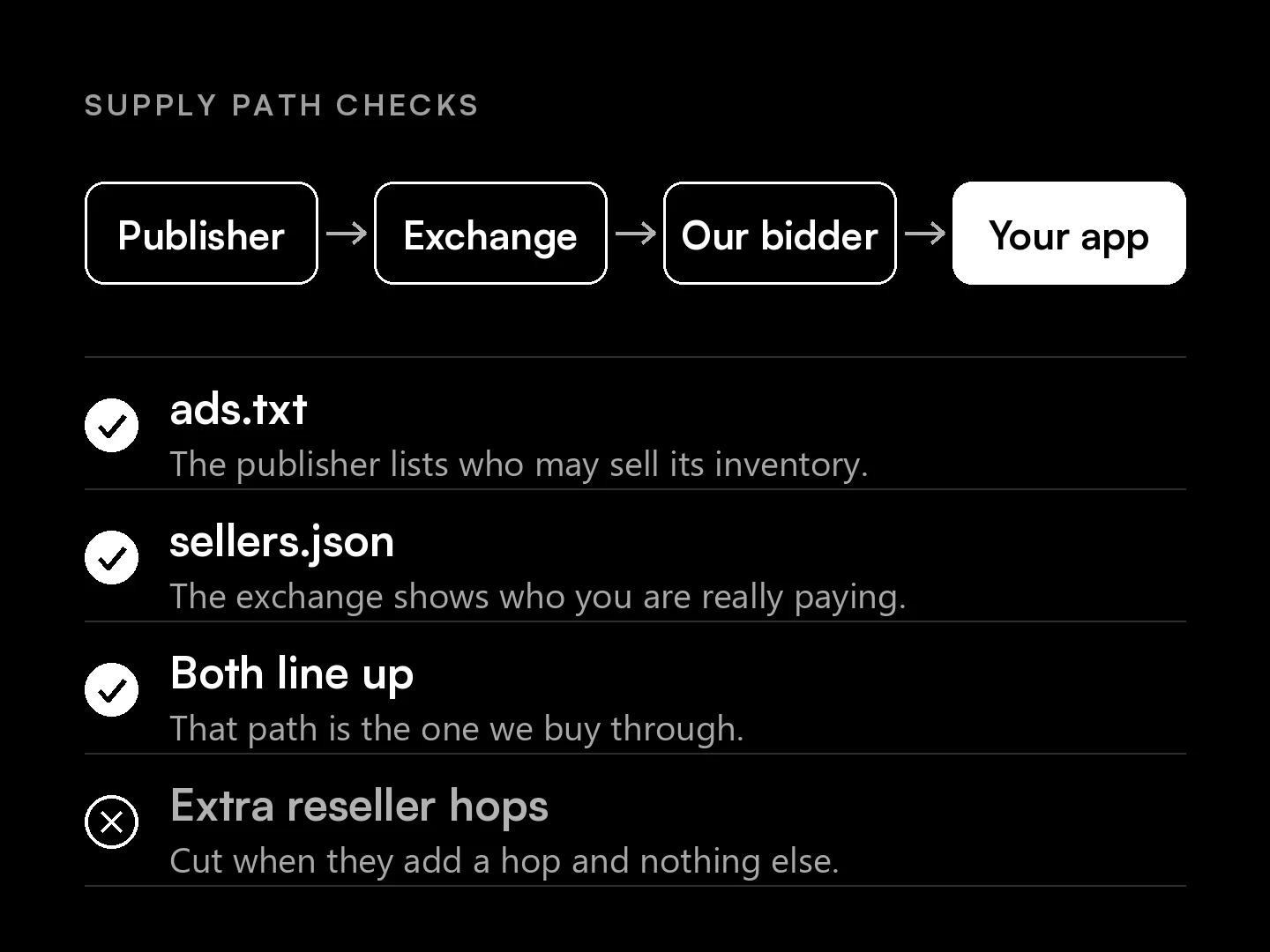
Two public standards do a lot of the work. ads.txt lets a publisher list who is authorised to sell its inventory, and sellers.json lets a buyer see who they're really paying. We buy through paths where both line up, and we cut resellers that add a hop without adding anything else.
What we exclude, and when
We watch the patterns that give fraud away: clicks arriving in bursts, installs with no activity after them, conversion times too fast for a human, and apps whose users never come back. When a source fails, it's excluded that day, not noted in a monthly report. It's the same discipline behind our work with Paytm, where traffic was validated before it was allowed to count.
Programmatic for fintech, gaming, ecommerce and subscription apps
The mechanics are the same across verticals. What counts as a good user is not.
Fintech and banking
The event that pays is usually a verified, funded or active account, not a sign up. Identity checks sit in the way, so a cheap install that stalls at verification is an expensive one. In markets with financial promotion rules, the ad itself is regulated, which narrows both the supply and the creative.
Gaming and iGaming
Games are judged on engaged players and, in real money gaming, on first deposits. Licensed operators answer for where their ads appear, so supply lists, age rules and placement controls are part of the plan from the first day. For BGMI, quality controls ran alongside programmatic reach for exactly that reason.
Ecommerce and retail
Here it's orders, and then the second order. Timing matters as much as targeting: creative that matches the occasion, and reporting that follows each order through to delivery.
Utilities and subscriptions
For a subscription app, the sale that matters is the one that survives the refund window. We optimise toward subscriptions that stick, the same thinking behind our ExpressVPN case study.
Programmatic campaigns we've run
A few of the programmatic stories from our work. The full write ups, and many more, are in our app marketing case studies.
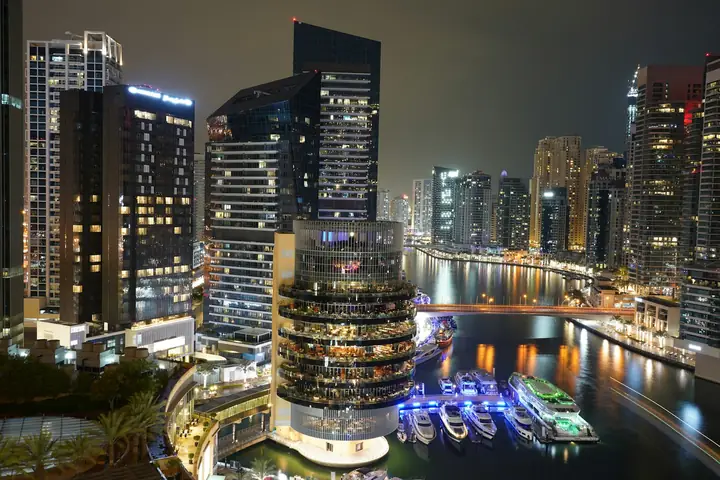
For Careem Quik, the brief was grocery orders, not installs. Audience segments built from geography, service intent and local context were paired with mobile first creative and run through programmatic media and performance partners. Grocery orders grew 4x in six months.
For Fanatics, programmatic reach, connected TV and performance partners carried creative timed to the sports calendar, with every channel reported against completed purchases rather than clicks.
For Paytm, the work began by consolidating attribution and validating traffic, so optimisation could point at verified activation instead of reach.
 4x
4xCareem case study
Scaling Careem Quik Grocery Orders 4x in 6 Months Through Mobile First Creative Storytelling
4x · Grocery orders
Read the case study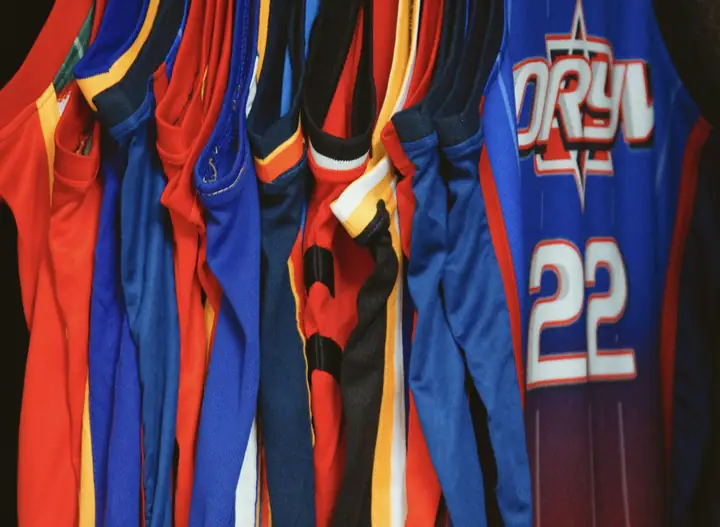
Fanatics case study
From fandom to the checkout.
Read the case study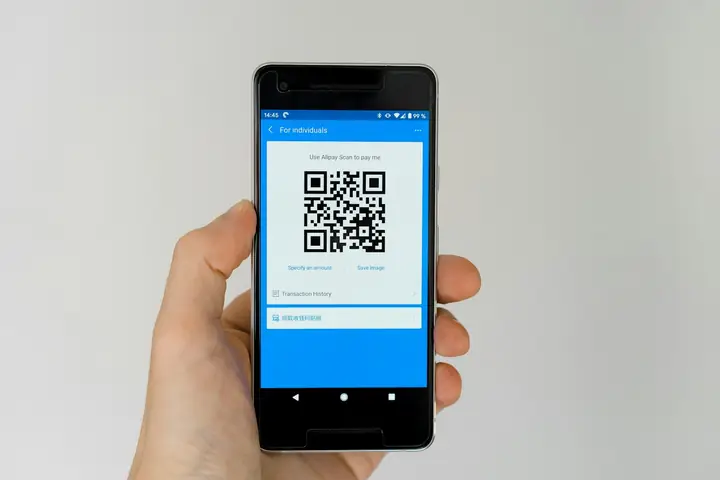
Paytm case study
Acquisition measured at the payment, not the download.
Read the case studyWhat it costs, and how the first 90 days go
Here's the honest version, told the way a campaign actually unfolds.
In the first couple of weeks, the bidding model knows almost nothing about your app. It explores, buying across apps, audiences and hours to find where your event happens. Every platform has this learning phase, and Google's own guidance for app campaigns ties the daily budget to a multiple of the cost of the action you're optimising for, so the system sees enough conversions to learn from.
That's where our minimum comes from. Say winning a deposit costs around thirty dollars. A campaign learning toward deposits needs a few hundred dollars a day before it has enough signal to stop guessing, which puts a single campaign close to ten thousand dollars a month. So we start at a media budget of $10,000 a month. Below that, you're paying for a model that never finishes learning.
Weeks three to six are where the money starts working. The model has found pockets that convert, and we cut the sources that don't. Creative that launched strong begins to tire, and the next round is already in testing.
By the end of the third month, you know what's real: which platforms, supply and creative deliver your event at a cost you'd happily pay again. That's why our first term is 90 days, and month to month after that. Anything shorter judges a campaign before it has learned anything.
Our fee is a percentage of media spend, shown on its own line of every invoice:
- 15% of monthly media spend up to $50,000
- 12% from $50,000 to $150,000
- 10% above $150,000
It falls as you scale because the work doesn't grow in a straight line with the budget, and because we'd rather keep a client for years than squeeze a quarter. Media is billed at cost, so you can see exactly what the platforms were paid.
Programmatic advertising in India, the UAE, Indonesia and the US
We run programmatic campaigns from New Delhi, where Yori Labs is headquartered, and from our offices in New York, Jakarta and Dubai. Each brings local context to creative, channel choice and campaign decisions, which matters more in programmatic than people expect. Supply differs by market, and so do the apps people use, how they pay and the rules that apply.
If you're looking for a programmatic advertising agency in India or in Dubai, that local context is the difference. India rewards scale, sharp pricing and creative in more than one language. In the UAE, Arabic and English creative run side by side. Indonesia is mobile to its core and moves fast. In the US, connected TV and privacy rules shape most plans.
Why teams choose Yori Labs as their programmatic advertising agency
Because we're judged the way you are. We point programmatic at the event that pays, validate traffic before it trains the bidder, choose platforms by fit rather than habit, and report numbers your finance team recognises. We've done it for fintech, gaming, commerce and subscription apps from four offices, and the case studies show the work, not just the logos.
Frequently asked questions
What does a programmatic advertising agency do?
A programmatic advertising agency plans and buys digital ads through automated platforms that bid for each impression in real time. The agency decides what the bidding should optimise for, which supply to buy, how to keep fraud out, which creative to run and how results are reported. For apps, that means buying toward deposits, orders or subscriptions.
How much does programmatic advertising cost?
Two costs matter: the media you buy and the agency fee. At Yori Labs, campaigns start at a media budget of $10,000 a month, and the fee is a percentage of spend, from 15% down to 10% as budgets grow. Media is billed at cost, so you always see exactly what the platforms were paid.
How does programmatic advertising work?
When someone opens an app or a web page, the ad space is auctioned in milliseconds. Demand side platforms bid for it on behalf of advertisers, using data about the placement, the device and the audience. The highest bid wins and the ad appears. The strategy lies in what you tell the bidding to value.
Programmatic vs paid search: which is better for an app?
They do different jobs. Paid search captures people already looking for something like your app, so it's often cheaper per user but limited in volume. Programmatic creates demand across a vast range of apps and sites, so it scales further. Most apps we work with run both and judge them against the same business event.
How long before programmatic campaigns show results?
Expect a learning phase of around two weeks while the bidding model explores, then steady improvement as weak sources are cut and creative is refreshed. By the end of the third month you should know which platforms, supply and creative deliver your event at a cost worth scaling. That's why our first term is 90 days.
How do you prevent ad fraud in programmatic campaigns?
By validating traffic before it trains the bidder. We buy through supply paths that check out against ads.txt and sellers.json, watch for warning signs like click bursts and installs with no activity, and exclude failing sources the same day. Clean signals matter, because the algorithm learns from everything it's given, fraud included.
Tell us the event that pays for your app
Deposits, orders, subscriptions, funded accounts: tell us which one your business runs on, and we'll show you how we'd buy it programmatically.
Start a conversation with Yori Labs